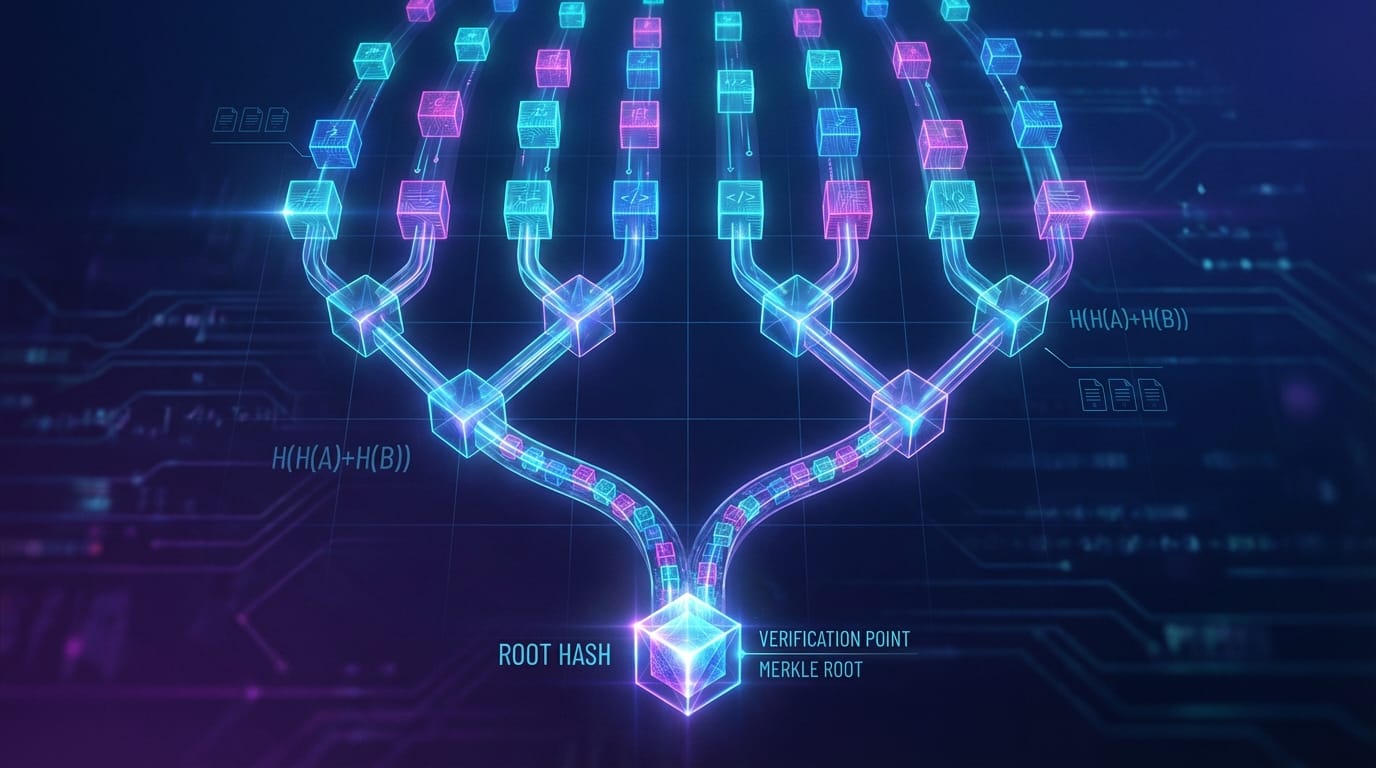
When projects like y00ts wanted to airdrop NFTs to their entire community, they faced a brutal economic reality: minting 15,000 traditional NFTs on Solana would cost around $150,000 in rent fees alone. Today, that same collection costs less than $150 thanks to state compression—a breakthrough that's quietly reshaping what's possible with digital assets on blockchain.
The Cost Problem That Nearly Broke NFTs
Traditional NFTs on any blockchain share a fundamental constraint: every NFT requires its own account to store ownership data. On Solana, maintaining an account requires "rent"—a deposit of SOL that sits locked as long as the account exists. For a single NFT, this rent is negligible, around 0.01 SOL. But scale that to 10,000 NFTs and you're looking at 100 SOL ($10,000+ at current prices) just to keep the data alive.
This economic model worked fine for 10K PFP projects where mint prices could absorb the costs. But it completely broke down for:
- Large-scale airdrops to entire communities
- Gaming applications needing millions of in-game items
- Loyalty programs distributing digital collectibles at scale
- Music platforms creating NFTs for every song or album
The industry needed a way to preserve the ownership guarantees and composability of NFTs while slashing storage costs by orders of magnitude.
Enter State Compression: Merkle Trees Meet Blockchain
Solana's solution borrows from a data structure as old as blockchain itself: the Merkle tree. Instead of storing each NFT in its own account, state compression stores only the Merkle tree root hash on-chain—a single 32-byte value that cryptographically represents potentially millions of NFTs.
Here's the clever part: the individual NFT data (owner address, metadata, etc.) gets stored off-chain by RPC providers, but anyone can verify ownership by providing a Merkle proof—a cryptographic path from the NFT's data to the on-chain root hash. If the proof is valid, the ownership is mathematically guaranteed to be correct.
This architecture delivers stunning economics:
- 1 million traditional NFTs: ~10,000 SOL in rent ($1M+)
- 1 million compressed NFTs: ~10 SOL in rent ($1,000)
That's a 1000x cost reduction—not through technical compromise, but through smarter architecture.
What Gets Preserved (and What Changes)
Compressed NFTs maintain the critical properties that make NFTs valuable:
- True ownership: Your wallet address is the verified owner
- Transferability: You can trade, sell, or transfer cNFTs just like regular NFTs
- Composability: Programs can verify and interact with cNFTs on-chain
- Immutability: The Merkle tree ensures data can't be tampered with
The main tradeoff is infrastructure dependency: since the detailed NFT data lives off-chain with RPC providers, your experience depends on those providers indexing and serving the data correctly. Solana's major RPC providers (Helius, Triton, QuickNode) have built robust indexing for compressed NFTs, but it's a different trust model than having everything on-chain.
In practice, this hasn't been a problem. The economic incentive for RPC providers to maintain good indexing is strong, and the data can be reconstructed from transaction logs if needed.
Real-World Adoption: From DRiP to Dialect
The applications that have emerged since state compression launched in 2023 validate the technology:
- DRiP distributes free digital collectibles from artists to collectors daily. They've minted over 50 million cNFTs, creating a sustainable model where art distribution doesn't cost thousands per drop.
- Dialect uses cNFTs for on-chain messaging and notifications, where each message becomes a tradeable, collectible asset without bloating on-chain storage.
- Crossmint built enterprise NFT infrastructure using cNFTs, enabling brands to distribute millions of digital collectibles for loyalty programs and marketing campaigns.
Gaming studios are particularly excited. A single MMORPG might need millions of NFTs for weapons, armor, consumables, and cosmetics. State compression makes this economically viable where it simply wasn't before.
The Broader Implications
State compression represents a maturation in blockchain thinking. Early blockchain philosophy insisted everything must live on-chain, but this created artificial constraints that limited real-world utility. The compressed NFT model acknowledges that different data has different security requirements.
Ownership verification needs to be absolutely bulletproof and live on-chain—that's the Merkle root. But the detailed metadata ("this sword has +10 attack and glows blue") can live off-chain as long as it's cryptographically tied to that on-chain root.
This architectural pattern extends beyond NFTs. Solana Labs is exploring state compression for other data types where you need cryptographic guarantees but don't need every byte on-chain. The core insight—separate what must be consensus-verified from what can be validity-verified—could reshape how we think about blockchain scalability.
For now, state compression has already achieved its primary goal: making NFTs economically viable at scales that were pure fantasy just two years ago. When million-item collections become routine rather than remarkable, we'll know the technology succeeded.