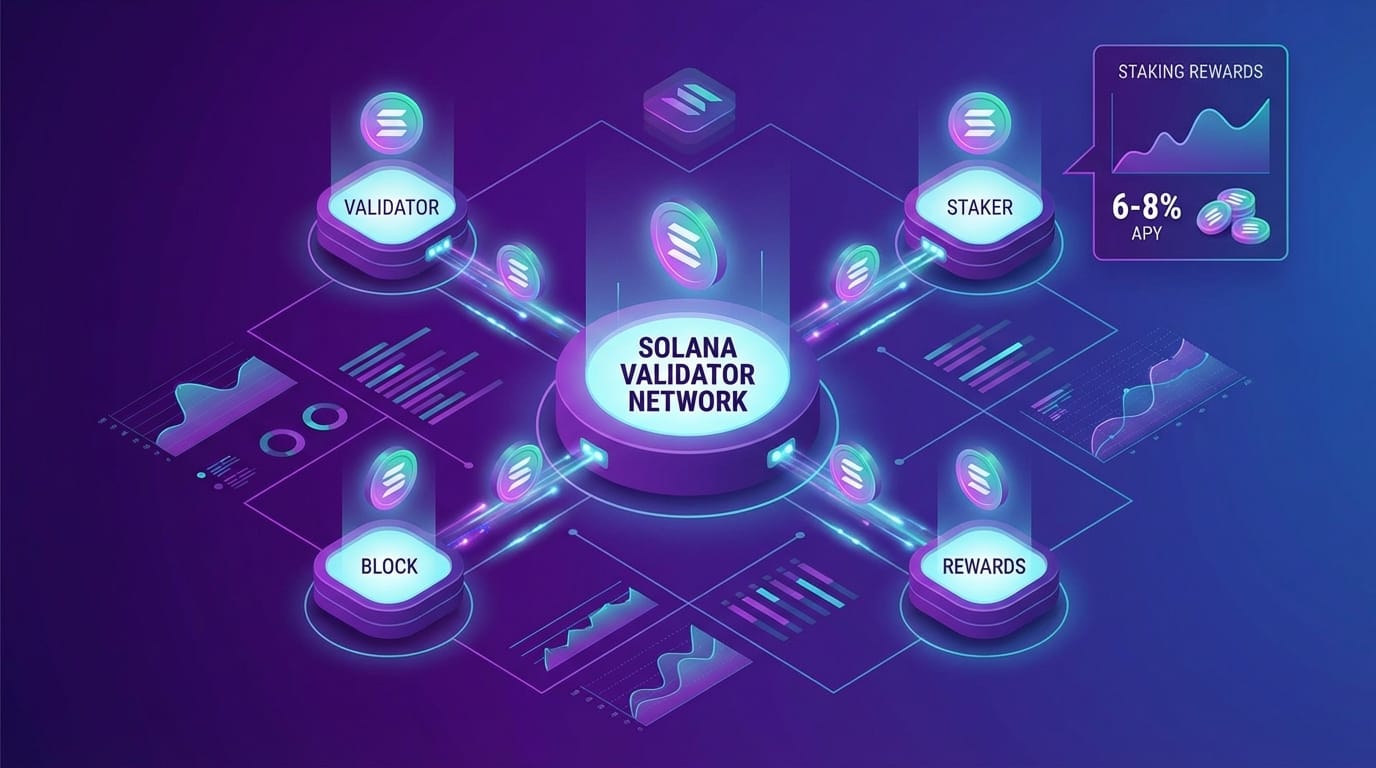
Solana's performance isn't just about technology—it's powered by a sophisticated economic system that incentivizes validators to secure the network. Understanding validator economics reveals how Solana maintains its speed and reliability while rewarding participants.
The Validator Revenue Model
Solana validators earn revenue from two primary sources: inflation rewards and transaction fees. The inflation schedule is designed to decrease over time, starting at around 8% annually and declining to 1.5% in the long term. This creates a predictable reward structure while gradually reducing supply pressure.
Transaction fees provide an additional revenue stream that grows with network activity. As Solana's adoption increases, fee revenue becomes increasingly significant. Priority fees—introduced to help validators optimize block space—add another layer to the economic model, allowing users to pay extra for faster transaction inclusion.
Staking Mechanics and Delegator Returns
SOL holders don't need to run validators to earn rewards—they can delegate their tokens to existing validators. Validators charge a commission (typically 5-10%) on the staking rewards they generate, creating a symbiotic relationship between operators and delegators.
The staking process is seamless—no lock-up periods like other chains, though there is a warm-up and cool-down epoch when delegating or undelegating. Each epoch lasts about 2-3 days, during which validators earn rewards based on their stake weight and performance.
The Cost of Running a Validator
Running a Solana validator isn't cheap. Hardware requirements are substantial—high-end servers with 256GB+ RAM, fast NVMe storage, and powerful CPUs are essential. Monthly operational costs typically range from $1,000 to $3,000 for infrastructure alone.
Beyond hardware, validators need to maintain high uptime and performance to maximize rewards. The network's consensus mechanism penalizes poor performance through reduced vote credits, which directly impacts earnings. This creates a natural quality filter—only well-run validators remain profitable.
Stake Distribution and Network Health
Solana's health depends on decentralized stake distribution. The Solana Foundation runs programs to encourage delegation to smaller validators, helping prevent concentration among a few large operators. The Stake-o-Matic program and various delegation pools work to balance the network.
Currently, Solana has over 1,500 active validators—more than most proof-of-stake networks. This validator count, combined with relatively distributed stake, creates meaningful decentralization while maintaining the network's performance characteristics.
Future Economic Adjustments
As transaction volume grows, the economic model evolves. Some validators now earn more from fees than inflation—a sign of network maturation. This transition is crucial for long-term sustainability, as it reduces reliance on inflation while validator revenue increases with network usage.
The community continues to discuss potential improvements to validator economics, including adjustments to commission structures, stake weighting mechanisms, and fee distribution. These conversations reflect Solana's commitment to aligning economic incentives with network health.
Understanding validator economics isn't just about numbers—it's about seeing how Solana creates a self-sustaining ecosystem where performance, security, and profitability align. For validators, delegators, and the broader community, these economics determine the network's long-term viability.